🎄 A festive, uncrowded finale
Late December is the quietest season at the ancient sites, and Syntagma Square is the city's festive heart — Greece's biggest Christmas tree, roasting chestnuts, and free concerts near Parliament. Look for melomakarona in every bakery.
Days 7–8 bring the voyage home to Athens, with an overnight in port — so there's no rush. A relaxed afternoon, a lit-up Acropolis after dark, and a full second morning before we disembark. Here's how I'd shape it.
Two days · overnight
The plan
- The Acropolis and the Acropolis Museum while the light is good.
- Down into Plaka for dinner — we're staying the night, so linger.
- Evening: Syntagma's Christmas lights, or Lycabettus Hill at dusk.
- One more before disembarkation: the Ancient Agora, Panathenaic Stadium, or the Temple of Olympian Zeus — all open by 8:00.
- Or a slow last wander and coffee in Plaka.
- Then home — or onward to a Viking extension.
What to see
Sights & history
› The Acropolis & Parthenon Must-see
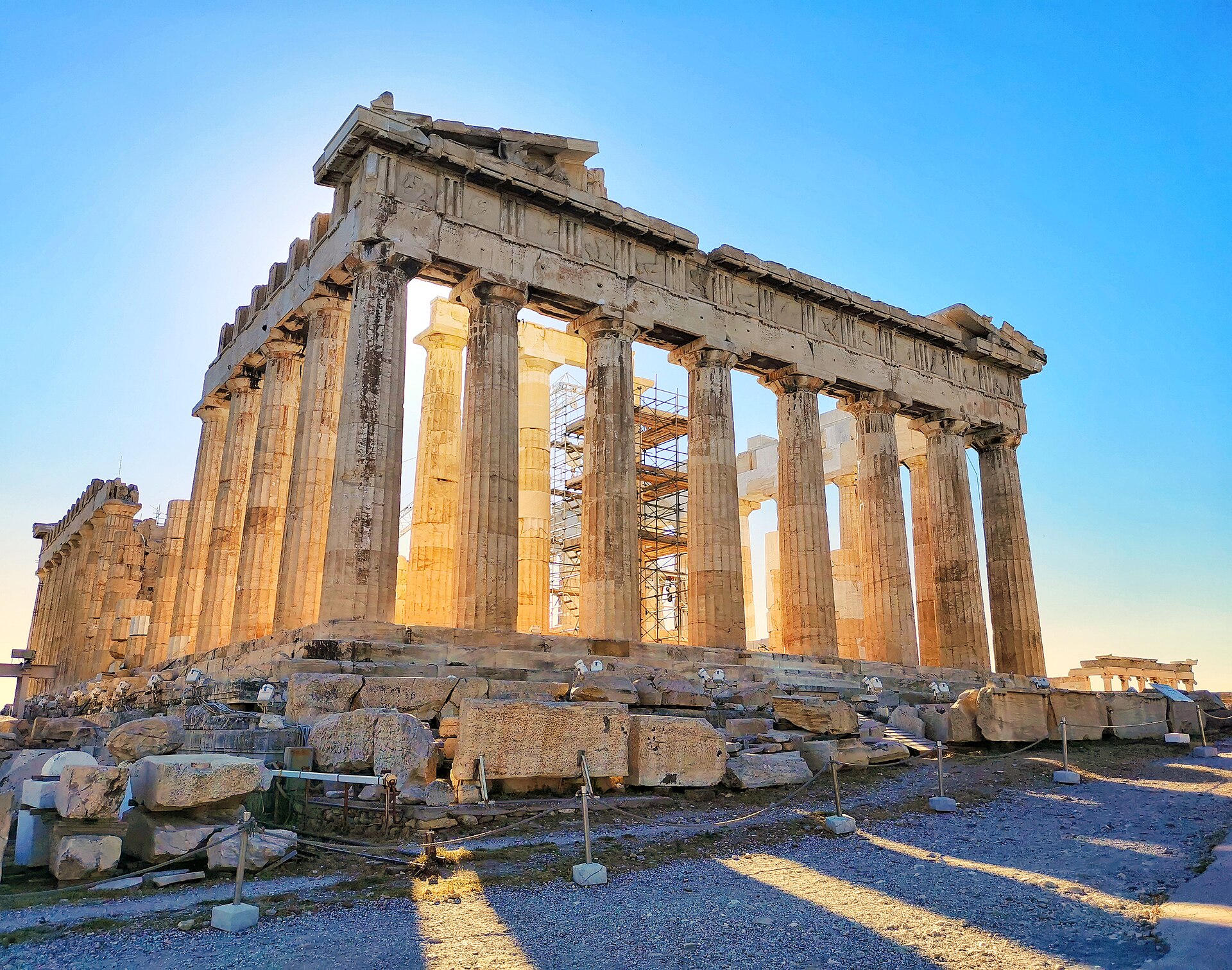 📍 Acropolis
The icon of the whole trip — and gloriously uncrowded in late December.
› Acropolis Museum Pairs with the rock
Climate-controlled and brilliant — the perfect pairing with the open-air site.
› National Archaeological Museum World-class
The one big sight away from the old town, about ten minutes north by taxi. Mind the winter hours: on our Monday it's a morning-to-3:30 museum, but on our Tuesday it doesn't open until 1 pm — then runs to 8.
› Ancient Agora — Temple of Hephaestus & Stoa of Attalos Must-see
A natural walk-down from the Acropolis toward Monastiraki. Two winter notes: while the main Adrianou entrance is rebuilt, entry is via the gate at Thiseio Square, and the Stoa's upper-floor exhibition is closed this season — the colonnade and museum below are open as usual.
› Roman Agora & Hadrian's Library Roman Athens
They sit two minutes apart where Monastiraki turns into Plaka, so they fold into any old-town wander. Pure Roman Athens — the history detour below is about exactly these men. Note the early winter close: these are morning sights.
› Plaka District Old city
Where I'd point us for dinner on the overnight — atmospheric, walkable, festive after dark.
› The Changing of the Guard Gpa's pick
On the list by Grandpa's request. It happens every hour on the hour, both our days — an easy fold-in, with Plaka and the Panathenaic Stadium a short walk away.
› National Garden Free stroll
It starts directly behind the Evzones at Syntagma, and the far gates come out by Hadrian's Arch and the Panathenaic Stadium — so the guard ceremony, a shaded stroll, the Temple of Olympian Zeus, and the stadium all thread onto one easy green line. Mild December days were made for it.
› Temple of Olympian Zeus Day 2 pick
An easy last-morning stop past Hadrian's Arch — though the avenue alongside is being re-landscaped, so some fencing around the Arch itself is possible.
› Panathenaic Stadium Day 2 pick
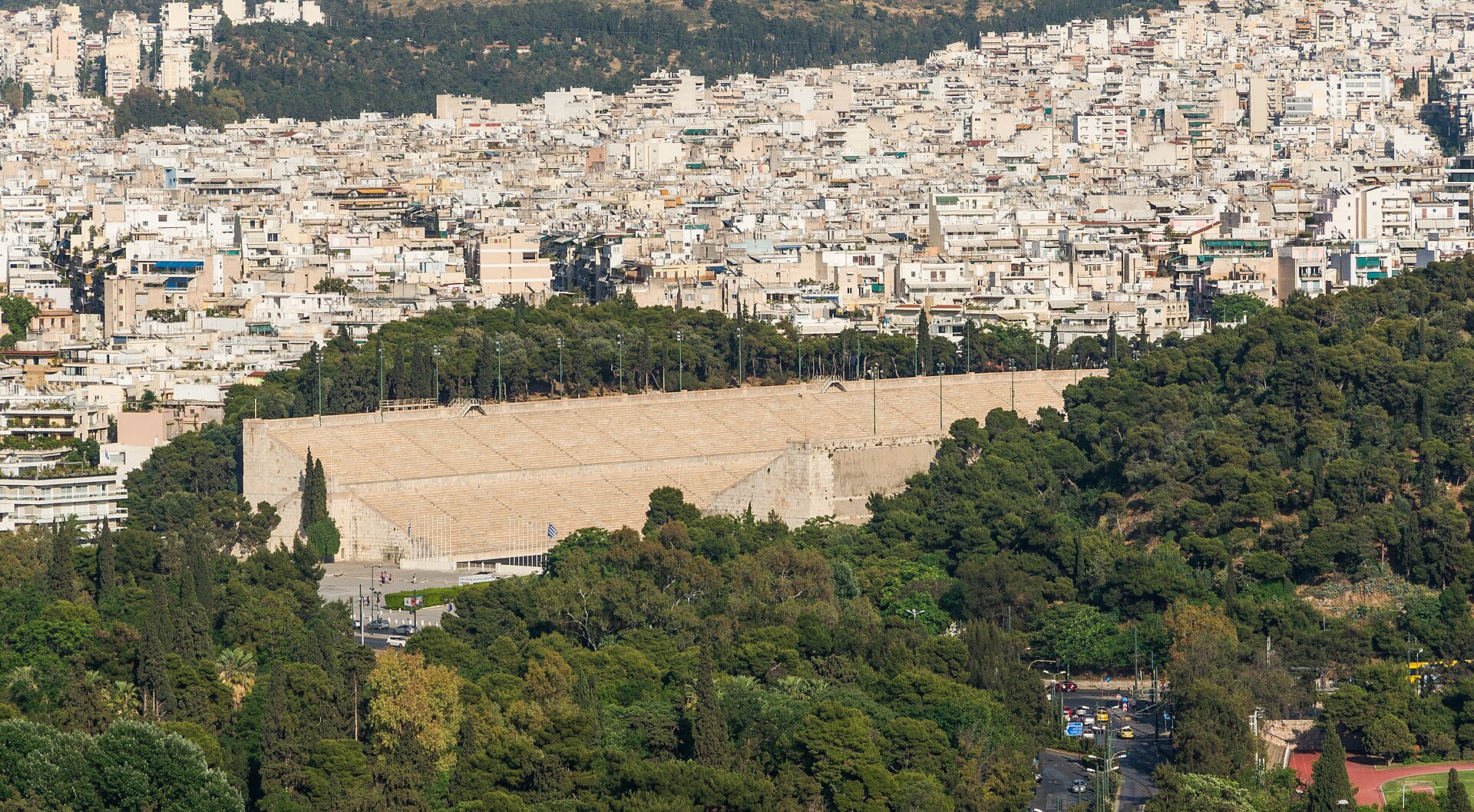 📍 Panathenaic Stadium
Easy, satisfying second-morning target before we sail — a short walk from the Temple of Olympian Zeus, so the pair make a natural loop.
› Kerameikos Check first
The quietest, greenest ancient site in Athens — with one catch: it's been closed for restoration since May 2025 with no announced reopening. I'll re-check as we get close; if it's open again by December, it's worth the ten-minute walk down Ermou.
› Aristotle's Lyceum Quiet detour
Low ruins in a quiet garden next to the Byzantine & Christian Museum, a short stroll from Syntagma. Small and peaceful — five euros for the cheapest brush with genius in Athens.
› Lycabettus Hill Best view
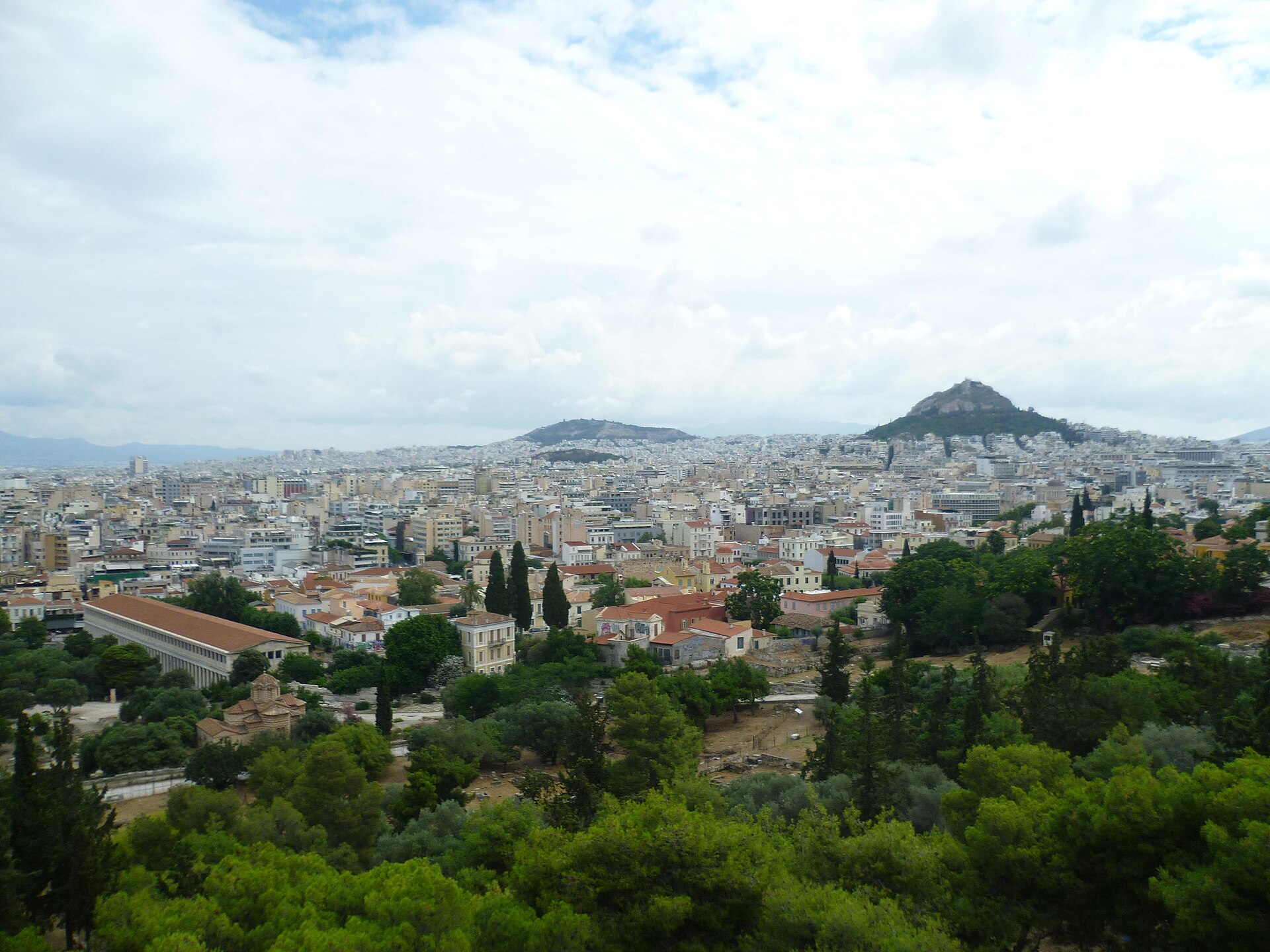 📍 Lycabettus Hill
Walk or funicular up for the best panorama — superb at sunset.
› Optional · for the history loverThe day Athens stopped being ancient History detour
Rome adored Athens. The emperor Hadrian lavished it with a library, an arch, and the long-unfinished Temple of Olympian Zeus, which he finally completed; the millionaire Herodes Atticus built the theatre still used for concerts on the Acropolis slope.
But the moment I find most haunting is the ending. In 529 AD the emperor Justinian ordered the ancient philosophical schools to close — including Plato's Academy, which had taught for nearly 900 years. Historians often mark that decree as the very end of classical antiquity. The Parthenon didn't fall silent, though: it became a Byzantine cathedral to the Virgin Mary, then later a mosque, then the ruin we revere — temple, church, mosque, monument, all the same marble. A fitting last thought as our voyage ends.
What to eat
Food & drink
Eat late, like a local
Per Gpa's tip, Athenians dine late, so kitchens run into the evening — ideal for our overnight. Plaka and the streets off Syntagma are easy bets.
Festive sweets
Melomakarona (honey-spice Christmas cookies), roasted chestnuts, and warm bakery stops between sights.
Loukoumades — Gpa's order
"Like donuts with honey." The champion: Ktistakis near Omonoia Square — since 1912, syrup-soaked centers, made by the founder's grandson. LUKUMAΔΕΣ just off Ermou by Monastiraki is the easy in-route stop.
Couleur Locale
The hidden one. A rooftop tucked behind an arcade off Monastiraki Square — look for the little Normanou alley entrance — with the Acropolis filling the view. Found once by the family; now it's tradition.
The Electra rooftop
Steaks and a straight-on Acropolis view at the Electra's rooftop restaurant near Syntagma — already on the family's dinner list for our overnight.
When we're there
December here
Festive and calm
Mild by day (about 48–59°F), cooler in the mid-40s°F evenings — a light coat and layers. Late December is the least-crowded time of year at the Acropolis, and the city wears its Christmas lights well.
Good to know
Andrew's notes
› The overnight is a gift
With a night in port we can have dinner ashore, see the Acropolis lit after dark, and keep a full, unhurried second morning before disembarkation.
› Acropolis practicalities
€30, winter hours 8:00–17:00 (last entry 16:30), open on our Dec 28–29 dates. Wear grippy shoes — the marble is famously slippery.
› Winter hours & tickets at the ancient sites
The smaller sites — Roman Agora, Hadrian's Library, Temple of Olympian Zeus, the Lyceum — close at 3:00 pm in winter (last entry ~2:40), the Ancient Agora at 4:30, the Acropolis at 5:00. So the ruins are morning things; the museums, cafés, and Plaka carry the afternoon. Everything state-run is closed Dec 25–26 and open again for our two days.
Tickets are sold per site at the gate or at hhticket.gr (the official shop), which also lists a 5-day unified ticket covering the Acropolis plus the six ancient sites — roughly €50, against about €95 if bought one by one, so it's the obvious buy if we see more than the Acropolis and one agora. The two museums are separate from all of this: the Acropolis Museum and the National Archaeological Museum each sell their own €20 ticket. Verified hours and prices are from the Greek Ministry of Culture and the museums' official sites as of July 2026; I'll confirm the unified-ticket price and re-check everything in December.
› Getting around, the fun way
Electric tuk-tuks — somewhere between a golf cart and a carriage — run tours through the old town and around the Acropolis perimeter, picking up near Plaka and Monastiraki. Easy on the legs, great for photos. Another of Grandpa's requests, happily granted.
› This is the end of the line
Day 8 is disembarkation; if anyone wants more Greece, Viking offers post-cruise extensions in Athens and beyond.