The day after Christmas
Rhodes' walled Old Town is gloriously quiet in winter — you'll have the medieval lanes almost to yourselves.
Day 5 is Rhodes: step through the city walls and you're in the largest inhabited medieval town in Europe, knight's-cross banners and all. Here's the day.
Day 5
The plan
- Walk straight into the Medieval Old Town from the port — the Street of the Knights.
- The Palace of the Grand Master, the Hospitaller fortress at the top of the hill.
- Optional drive south to Lindos (~50 km) — whitewashed village under a clifftop acropolis.
- Coffee at Mandraki Harbour, where the Colossus is said to have stood.
What to see
Sights & history
› The Medieval Old Town Must-see
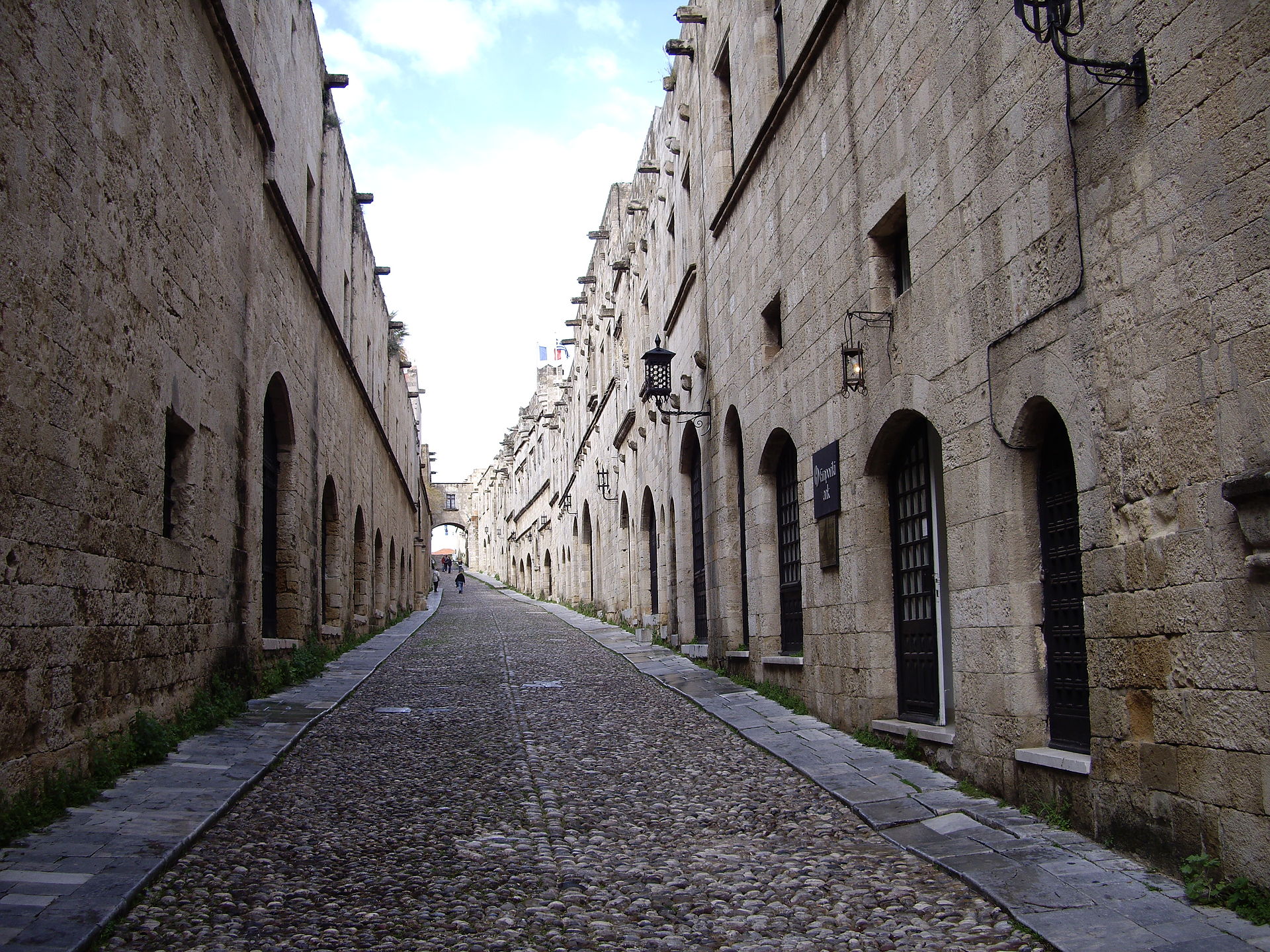 📍 Rhodes Old Town
Just wander: the Street of the Knights, the inns of the langues, gates and moats. Walkable from the ship.
› Palace of the Grand Master Must-see
The commanding set-piece at the top of the Street of the Knights.
› Lindos & its Acropolis Half-day
A ~50 km drive and a steep climb, but the most beautiful spot on the island.
› Mandraki Harbour Legend
Bronze deer now mark the spot; a pleasant, breezy stroll.
› Optional · for the history loverColossus, Caesars, and an island of exiles History detour
Before the Knights, Rhodes was an ancient maritime powerhouse and a kind of university town of the Roman world. Cicero studied rhetoric here; Julius Caesar came to study and was famously kidnapped by pirates en route; and the future emperor Tiberius spent years in self-imposed exile on the island.
Its most famous sight is gone: the Colossus of Rhodes, a 30-metre bronze statue of the sun-god Helios and one of the Seven Wonders, which stood only ~60 years before an earthquake toppled it around 226 BC. The bronze lay where it fell for centuries; legend says that when Arab raiders took Byzantine Rhodes in the 7th century, they sold the wreckage for scrap. And in 42 BC, Cassius — yes, that Cassius — sacked the city for refusing to fund the assassins' war against Octavian. Layers on layers.
What to eat
Food & drink
Greek classics
Souvlaki, fresh-grilled fish, and crisp local Rhodian white wine.
Island sweet
Melekouni — a sesame-and-honey bar that's the traditional Rhodian celebration treat.
When we're there
December here
Mild and quiet
The Dodecanese stay gentle in winter — around 54–61°F (12–16°C) and often sunny, though a shower is possible. Summer-only draws (the Valley of the Butterflies, beach clubs) are closed, but the Old Town is at its most atmospheric.
Good to know
Andrew's notes
› Old Town is at your feet
The walled city is a short walk from the cruise port — no transport needed for the headline sight.
› Lindos takes commitment
It's ~50 km each way plus a steep climb to the acropolis; a half-day in itself. Decide between Lindos and a slow Old Town morning.
› Winter rhythms
Some shops and tavernas keep shorter winter hours; the big monuments stay open.